Wednesday, January 28, 2009

Higher River Levels Predicted As More Carbon Dioxide Makes Plants Less Thirsty


Higher River Levels Predicted As More Carbon Dioxide Makes Plants Less Thirsty

Rising carbon dioxide levels will increase river levels in the future, according to a team of scientists from the Met Office Hadley Centre, the University of Exeter and the Centre for Ecology & Hydrology.

The findings, published on 30 August 2007 in the journal Nature, suggest that increasing carbon dioxide will cause plants to extract less water from the soil, leaving more water to drain into rivers which will add to the river flow increases already expected due to climate change.
Last year, members of the research team showed that this effect can already be seen in historical river flow records.
This new study shows that the effect of plant responses to carbon dioxide could be as important as those of increased rainfall due to man-made climate change.

Saturday, January 17, 2009

CBSE SCIENCE MODEL QUESTION 10th STD


CBSE - SCIENCE

X – SECTION – A

PHYSICS AND CHEMISTRY


1. What is meant by the statement, “ potential difference between points A and B in an electric field is 1 volt.

2. Refractive index of media A, B, C and D are

i. A 1.33
ii. B 1.52
iii C 1.44
iv D 1.65
In which of the four media is the speed of light (i) maximum (ii) minimum.

3.What sign convention has been given to the focal length of a convex mirror

4.During summer season, a milkman usually adds a very small amount of baking soda to fresh milk. Give one reason.

5.What is the colour of phenolphthalein indicator in an acidic solution.

6.Why does magnesium powder react much more rapidly than magnesium ribbon with dil.H2SO4

7.A student performs an experiment to study the magnetic effect of current around a current carrying straight conductor. He reports that the direction of deflection of the north pole of a compass needle kept at a given point near the conductor remains unaffected even when the terminals of the battery sending current in the wire are inter changed.for a given battery, the degree of deflection of a N-pole decreases when the compass is kept at a point farther away from the conductor.Which of the above observations of the student is incorrect and why?

8. What is the meaning of the term ‘frequency’ of an alternating current?What is value in India?
Why is an alternating current considered to be advantageous over direct current for long
range transmission of electric energy?

9. What are the two major shortcomings of Mendeleev’s periodic table? How have
these been removed in the modern periodic table?

10.Give reasons for the following.
i) Metals are regarded as electropositive elements.
ii) Articles made of Aluminium donot corrode even though Al is an active metal.

11.Draw the electron dot structures of ethane, ethene, and ethyne molecule.

12. Give reasons for the following.
Why do unsaturated hydrocarbons show addition reactions.
Why is the conversion of ethanol to ethanoic acid an oxidation reaction.
Alcohol supplied for industrial purposes is mixed with CuSO4

13. i. State Ohm’s law.
ii. Draw a schematic diagram of the circuit for studying ohm’s law
A wire of length L and resistance R is stretched so that its length is doubled and area of cross section is halved. How will its
i. resistance change, ii. Resistivity change.

14. A 14 year student is not able to see clearly the questions written on the black board placed at a distance of 5m from him.
Name the defect of vision he is suffering from.
With the help of labeled ray diagrams show how this defect can be corrected.
Name the type of lens used to correct this defect


15. Explain the construction and working of a electric motor.

OR

Give reasons for the following
:
i)The sky appears to be blue during day time to a person on earth.
ii) The sky near the horizon appears to have a reddish heu at the time of sunset and sunrise
iii) The sky appears dark instead of blue to an astronaut.
iv) The stars appears to twinkle
(v) The planets do not twinkle.


16. You are given the following materials:
Iron nails
Copper sulphate solution
Barium chloride solution
Copper powder
Ferrous sulphate crystals
Quick Lime

Identify the type of chemical reaction taking place when.

(a) Barium chloride solution is mixed with copper sulphate solution and a white
precipitate is observed.
(b) On heating copper powder in air in a China dish, the surface of copper powder
turns black.
(c) On heating green coloured ferrous sulphate crystals, reddish brown solid is left and smell of a gas having odour of burning sulphur is experienced.
(d) Iron nails when left dipped in blue copper sulphate solution become brownish in colour and the blue colour of copper sulphate fades away.
(e) Quick lime reacts vigorously with water releasing a large amount of heat.

OR
Four metals A, B, C and D are, in turn, added to the following solutions one by one. The observations made are tabulatd below:


Answer the following questions based on above information.
(i) Which is the most active metal and why? (ii) What would be observed if B is added to a solution of copper (II) sulphate and why?
(iii) Arrange the metals A, B, C and D in order of increasing reactivity.
(iv) Container of which metal can be used to store both zinc sulphate solution and
silver nitrate solution.
(v) Which of the above solutions can be easily stored in a container made up of any of
these metals?

Thursday, November 13, 2008

CHANDRAYAAN-1

CHANDRAYAAN-1

The primary objectives of Chandrayaan-1 are:

1. To expand scientific knowledge about the moon

2. To upgrade India's technological capability

3. To provide challenging opportunities for planetaryresearch to the younger generation of Indian scientists


Sunday, November 9, 2008

Record High Performance With New Solar Cells


Researchers in China and Switzerland are reporting the highest efficiency ever for a promising new genre of solar cells, which many scientists think offer the best hope for making the sun a mainstay source of energy in the future. The photovoltaic cells, called dye-sensitized solar cells or Grätzel cells, could expand the use of solar energy for homes, businesses, and other practical applications, the scientists say.
The research, conducted by Peng Wang and colleagues — who include Michael Grätzel, inventor of the first dye-sensitized solar cell — involves photovoltaic cells composed of titanium dioxide and powerful light-harvesting dyes. Grätzel cells are less expensive than standard silicon-based solar cells and can be made into flexible sheets or coatings.

Although promising, Grätzel cells until now have had serious drawbacks. They have not been efficient enough at converting light into electricity. And their performance dropped after relatively short exposures to sunlight.

In the new study, researchers describe lab tests of solar cells made with a new type of ruthenium-based dye that helps boost the light-harvesting ability. The new cells showed efficiencies as high as 10 percent, a record for this type of solar cell. The new cells also showed greater stability at high temperatures than previous formulas, retaining more than 90 percent of their initial output after 1,000 hours in full sunlight.

Thursday, October 9, 2008

INDIAN SPACE RESEARCH

INDIAN SPACE PROGRAMMES -- 2008 -- 1962


2008


PSLV-C9 successfully launches CARTOSAT-2A, IMS-1 and 8 foreign nano satellites from Sriharikota (April 28, 2008).

PSLV-C10 successfully launches TECSAR satellite under a commercial contract with Antrix Corporation (January 21, 2008).


2007


Successful launch of of GSLV (GSLV-F04) with INSAT-4CR on board from SDSC SHAR (September 2, 2007).

ISRO's Polar Satellite Launch Vehicle, PSLV-C8, successfully launched Italian astronomical satellite, AGILE from Sriharikota (April 23, 2007).

Successful launch of INSAT-4B by Ariane-5 from Kourou French Guyana, (March 12, 2007).

Successful recovery of SRE-1 after manoeuvring it to reenter the earth’s atmosphere and descend over the Bay of Bengal about 140 km east of Sriharikota (January 22, 2007).

ISRO's Polar Satellite Launch Vehicle, PSLV-C7 successfully launches four satellites - India’s CARTOSAT-2 and Space Capsule Recovery Experiment (SRE-1) and Indonesia’s LAPAN-TUBSAT and Argentina’s PEHUENSAT-1 (January 10, 2007).


2006


Second operational flight of GSLV (GSLV-F02) from SDSC SHAR with INSAT-4C on board. (July 10, 2006). Satellite could not be placed in orbit.


2005


Successful launch of INSAT-4A by Ariane from Kourou French Guyana, (December 22, 2005).

ISRO's Polar Satellite Launch Vehicle, PSLV-C6, successfully launched


CARTOSAT-1 and HAMSAT satellites from Sriharikota(May 5, 2005).


2004


The first operational flight of GSLV (GSLV-F01) successfully launched EDUSAT from SDSC SHAR, Sriharikota (September 20, 2004)


2003


ISRO's Polar Satellite Launch Vehicle, PSLV-C5, successfully launched RESOURCESAT-1 (IRS-P6) satellite from Sriharikota(October 17, 2003).

Successful launch of INSAT-3E by Ariane from Kourou French Guyana, (September 28, 2003).


The Second developmental launch of GSLV-D2 with GSAT-2 on board from Sriharikota (May 8, 2003).


Successful launch of INSAT-3A by Ariane from Kourou French Guyana, (April 10, 2003).


2002


ISRO's Polar Satellite Launch Vehicle, PSLV-C4, successfully launched KALPANA-1 satellite from Sriharikota(September 12, 2002).

Successful launch of INSAT-3C by Ariane from Kourou French Guyana, (January 24, 2002).


2001


ISRO's Polar Satellite Launch Vehicle, PSLV-C3, successfully launched three satellites -- Technology Experiment Satellite (TES) of ISRO, BIRD of Germany and PROBA of Belgium - into their intended orbits (October 22, 2001).

The first developmental launch of GSLV-D1 with GSAT-1 on board from Sriharikota (April 18, 2001)


2000


INSAT-3B, the first satellite in the third generation INSAT-3 series, launched by Ariane from Kourou French Guyana,(March 22, 2000).


1999


Indian Remote Sensing Satellite, IRS-P4 (OCEANSAT), launched by Polar Satellite Launch Vehicle (PSLV-C2) along with Korean KITSAT-3 and German DLR-TUBSAT from Sriharikota (May 26, 1999).

INSAT-2E, the last satellite in the multipurpose INSAT-2 series, launched by Ariane from Kourou French Guyana, (April 3, 1999).


1998


INSAT system capacity augmented with the readiness of INSAT-2DT acquired from ARABSAT (January 1998).


1997


INSAT-2D, fourth satellite in the INSAT series, launched (June 4, 1997). Becomes inoperable on October 4, 1997. (An in-orbit satellite, ARABSAT-1C, since renamed INSAT-2DT, was acquired in November 1997 to partly augment the INSAT system).

First operational launch of PSLV with IRS-1D on board (September 29, 1997). Satellite placed in orbit.


1996


Third developmental launch of PSLV with IRS-P3 on board (March 21, 1996). Satellite placed in polar sunsynchronous orbit.


1995


Launch of third operational Indian Remote Sensing Satellite, IRS-1C (December 28, 1995).

INSAT-2C, the third satellite in the INSAT-2 series, launched (December 7, 1995).


1994


Second developmental launch of PSLV with IRS-P2 on board (October 15, 1994). Satellite successfully placed in polar sunsynchronous orbit.

Fourth developmental launch of ASLV with SROSS-C2 on board (May 4, 1994). Satellite placed in orbit.


1993


First developmental launch of PSLV with IRS-1E on board (September 20, 1993). Satellite could not be placed in orbit.

INSAT-2B, the second satellite in the INSAT-2 series, launched (July 23, 1993).


1992


INSAT-2A, the first satellite of the indigenously-built second-generation INSAT series, launched (July 10, 1992).

Third developmental launch of ASLV with SROSS-C on board (May 20, 1992). Satellite placed in orbit.


1991


Second operational Remote Sensing satellite, IRS-1B, launched (August 29, 1991).


1990


INSAT-1D launched (June 12, 1990).


1988


INSAT-1C launched (July 21, 1988). Abandoned in November 1989.

Second developmental launch of ASLV with SROSS-2 on board (July 13, 1988). Satellite could not be placed in orbit.

Launch of first operational Indian Remote Sensing Satellite, IRS-1A (March 17, 1988).


1987


First developmental launch of ASLV with SROSS-1 satellite on board (March 24, 1987). Satellite could not be placed in orbit.


1984


Indo-Soviet manned space mission (April 1984).


1983


INSAT-1B, launched (August 30, 1983).
Second developmental launch of SLV-3. RS-D2 placed in orbit (April 17, 1983).


1982


INSAT-1A launched (April 10, 1982). Deactivated on September 6, 1982.


1981


Bhaskara-II launched (November 20, 1981).

APPLE, an experimental geo-stationary communication satellite successfully launched (June 19, 1981).


RS-D1 placed in orbit (May 31, 1981)

First developmental launch of SLV-3.


1980


Second Experimental launch of SLV-3, Rohini satellite successfully placed in orbit. (July 18, 1980).


1979


First Experimental launch of SLV-3 with Rohini Technology Payload on board (August 10, 1979). Satellite could not be placed in orbit.

Bhaskara-I, an experimental satellite for earth observations, launched (June 7, 1979).


1977


Satellite Telecommunication Experiments Project (STEP) carried out.


1975-1976


Satellite Instructional Television Experiment (SITE) conducted.


1975


ISRO First Indian Satellite, Aryabhata, launched (April 19, 1975).

Becomes Government Organisation (April 1, 1975).


1972-1976


Air-borne remote sensing experiments.


1972


Space Commission and Department of Space set up (June 1, 1972). ISRO brought under DOS.


1969


Indian Space Research Organisation (ISRO) formed under Department of Atomic Energy (August 15, 1969).


1968


TERLS dedicated to the United Nations (February 2, 1968).


1967


Satellite Telecommunication Earth Station set up at Ahmedabad.


1965


Space Science & Technology Centre (SSTC) established in Thumba.


1963


First sounding rocket launched from TERLS (November 21, 1963).


1962


Indian National Committee for Space Research (INCOSPAR) formed by the Department of Atomic Energy and work on establishing Thumba Equatorial Rocket Launching Station (TERLS) started.

Saturday, September 27, 2008

INDIAN SCIENTISTS

INDIAN SCIENTISTS


1. SUSHRUTA


Sushruta was born in 600 BC. He is known as the father of Indian surgery.He was the writer of the first book of surgery ‘Sushruta Samhita’. He was a skilled anaesthetist who gave medicated wine to patients to numb their senses before a surgery. He was also the first to perform a caesarean operation. He discovered the art of cataract crouching.


2. J.C. BOSE


Jagadish Chandra Bose was born on November 30 1858. He proved that much like human beings, plants too respond to pain. He conducted research on electophysiology of excitation in plant and animal tissues. Bose devised several precision instruments for research. He established the Bose Insitute at kolkata.


3.
P.C. RAY


Prafulla chandra Ray Was born on August 2 1861. He wa the father of Indian Chemical industry. He was a promoter of chemical education and chemical reasearch. From waste cattle bones he prepared phosphate of soda crystals. In 1896 he discovered mercurous nitrate.


4.
C.V. RAMAN


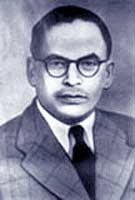
Chandrasekhara Venkata Raman was born on November 7, 1888. C.V. Raman is renowned for his discovery of the ‘Raman Effect’ in 1928., for which he got Nobel prize in 1930. He conducted reseach on molecular refraction of light, colour of flowers and plants, diffraction of X-rays and physics of crystals. HE was the founder director of Raman Research Institute, Bangalore.


5. MEGHNAD SAHA


He was born on october 6, 1893. HE presented the ‘Ionisation Formula’. Which explains the importance of spectra lines in spectrum. HE investigated on the theory of relativity, thermal ionisation of atoms, theory of solar corona, etc. The ‘Saha Eqution’ relating to stellar spectra is considered India’s precious gift to science in 20th century. He founded the National Academy of Sciences and the National Institute of Sciences.


6. SATYANDRA NATH BOSE


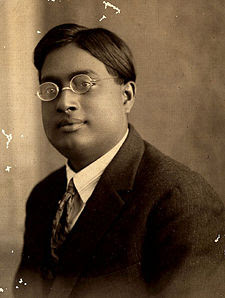
He was born on January 1, 1894 at kolkata. He was a renowned physicist who along with Albert Einstein formulated a general ststistics of quantum system called ‘Bose-Einstein ststistics’. He modified Planck’s Law of quantum theory and the theory of relativity. He conducted research on X-ray spectroscopy and unified field theory.


7. SHANTI SWARUP BHATNAGAR


He was born on february 21, 1894. He conducted research on emulsions and colloids. He rasearched to make wax odourless, to refine kerosene, to increse flame height aand to make petroleum waste in the oil industry. In his memory, the “Shanti Swarup Bhatnagar Prize”, for Science and Technology, is given every year.


Saturday, September 20, 2008

MOONS IN THE SOLAR SYSTEM


MOONS IN THE SOLAR SYSTEM


There are 169 known natural moons orbiting planets in our Solar System. 165 moons orbit the planets (Mercury, Venus, Earth, Mars, Jupiter, Saturn, Uranus, and Neptune), while 4 moons orbit the smaller "dwarf planets" (Pluto, Eris, and Ceres).

yeardiscovered, discoverer, distance fromplanet (km) diameter(km) orbital period(days)

Mercury - 0 Moons

Venus - 0 Moons

Earth - 1 Moon

Moon (or Luna) ? 384400 3476 27.322

Mars - 2 Moons

Deimos 1877 A. Hall 23,460 8 1.263

Phobos 1877 A. Hall 9,270 28X20 0.319


Jupiter - 63 Moons


yeardiscovered , discoverer , distance fromplanet (km) , diameter(km) , orbital period(days)


Adrastea 1979 Jewitt & Danielson 128,980 26 X 16 0.298

Aitne 2001 S. Sheppard, D. Jewitt, & J. Kleyna 23,547,000 3 736

Amalthea 1892 E. Barnard 181,300 262 X 134 0.498

Ananke 1951 S. Nicholson 21,200,000 20 631

Aoede 2003 S. Sheppard, D. Jewitt, & J. Kleyna 23,807,655 4 748.8

Arche 2002 S. Sheppard 23,064,000 3 715.6

Autonoe 2001 S. Sheppard, D. Jewitt, & J. Kleyna 24,122,000 4 753

Callisto 1610 Galileo 1,883,000 4,800 16.689

Carme 1938 S. Nicholson 22,600,000 30 692

Callirrhoe 2000 Spacewatch ProjectMinor Planet Center 24,200,000 10 774

Carpo 2003 S. Sheppard, D. Jewitt, & J. Kleyna 17,100,000 3 456.5

Chaldene 2000 S. Sheppard, D. Jewitt, Y. Fernandez, & G. Magnier 23,179,000 3.8 741

Cyllene 2003 S. Sheppard, D. Jewitt, & J. Kleyna 24,000,000 2 737.8

Elara 1905 C. Perrine 11,737,000 80 259.65

Erinome 2000 S. Sheppard, D. Jewitt, Y. Fernandez, & G. Magnier 23,279,000 3.2 672

Euanthe 2001 S. Sheppard, D. Jewitt, & J. Kleyna 21,017,000 3 622

Eukelade 2003 S. Sheppard, D. Jewitt, & J. Kleyna 24,557,295 4 237.0

Euporie 2001 S. Sheppard, D. Jewitt, & J. Kleyna 19,394,000 2 534

Europa 1610 Galileo 670,900 3126 3.551

Eurydome 2001 S. Sheppard, D. Jewitt, & J. Kleyna 23,219,000 3 713

Ganymede 1610 Galileo 1,070,000 5276 7.155

Harpalyke 2000 S. Sheppard, D. Jewitt, Y. Fernandez, & G. Magnier 21,105,000 4.3 595

Hegemone 2003 S. Sheppard, D. Jewitt, & J. Kleyna 24,514,095 3 781.6

Helike 2003 S. Sheppard, D. Jewitt, & J. Kleyna 10,972,830 4 233.8

Hermippe 2001 S. Sheppard, D. Jewitt, & J. Kleyna 21,252,000 4 630

Himalia 1904 C. Perrine 11,480,000 170 250.57

Io 1610 Galileo 421,600 3,629 1.769

Iocaste 2000 S. Sheppard, D. Jewitt, Y. Fernandez, & G. Magnier 21,269,000 5.2 657

Isonone 2000 S. Sheppard, D. Jewitt, Y. Fernandez, & G. Magnier 23,217,000 3.8 712

Kale 2001 S. Sheppard, D. Jewitt, & J. Kleyna 23,124,000 2 609

Kallichore 2003 S. Sheppard, D. Jewitt, & J. Kleyna 22,395,390 2 683.0

Kalyke 2000 S. Sheppard, D. Jewitt, Y. Fernandez, & G. Magnier 23,583,000 5.2 760

Kore 2003 S. Sheppard, D. Jewitt, & J. Kleyna 24,543,000 2 779.2

Leda 1974 C. Kowal 11,094,000 10 238.72

Lysithea 1938 S. Nicholson 11,720,000 24 259.22

Magaclite 2000 S. Sheppard, D. Jewitt, Y. Fernandez, & G. Magnier 23,806,000 5.4 771

Metis 1979 S. Sunnott 127,960 40 0.295

Mneme 2003 Scott S. Sheppard & B. Gladman 21,069,000 2 620.04

Orthosie 2001 S. Sheppard, D. Jewitt, & J. Kleyna 21,168,000 2 617

Pasiphae 1908 P. Melotte 23,500,000 36 735

Pasithee 2001 S. Sheppard, D. Jewitt, & J. Kleyna 23,029,000 2 715

Praxidike 2000 S. Sheppard, D. Jewitt, Y. Fernandez, & G. Magnier 21,147,000 6.8 632

Sinope 1914 S. Nicholson 23,700,700 28 758

Sponde 2001 S. Sheppard, D. Jewitt, & J. Kleyna 23,808,000 2 732

S/2000 J11 2000 S. Sheppard, D. Jewitt, Y. Fernandez, & G. Magnier 12,555,000 4.0 284.3

S/2003 J2 2003 S. Sheppard, D. Jewitt, & J. Kleyna 28,570,410 2 982.5

S/2003 J3 2003 S. Sheppard, D. Jewitt, & J. Kleyna 18,339,885 2 504.0

S/2003 J4 2003 S. Sheppard, D. Jewitt, & J. Kleyna 23,257,920 2 723.2

S/2003 J5 2003 S. Sheppard, D. Jewitt, & J. Kleyna 24,084,180 4 759.7

S/2003 J9 2003 S. Sheppard, D. Jewitt, & J. Kleyna 22,441,680 1 683.0

S/2003 J10 2003 S. Sheppard, D. Jewitt, & J. Kleyna 24,249,600 2 767.0

S/2003 J12 2003 S. Sheppard, D. Jewitt, & J. Kleyna 19,002,480 1 533.3

S/2003 J15 2003 S. Sheppard, D. Jewitt, & J. Kleyna 22,000,000 2 668.4

S/2003 J16 2003 S. Sheppard, D. Jewitt, & J. Kleyna 21,000,000 2 595.4

S/2003 J17 2003 S. Sheppard, D. Jewitt, & J. Kleyna 22,000,000 2 690.3

S/2003 J18 2003 S. Sheppard, D. Jewitt, & J. Kleyna 20,700,000 2 606.3

S/2003 J19 2003 S. Sheppard, D. Jewitt, & J. Kleyna 22,800,000 2 701.3

S/2003 J 23 2003 Scott S. Sheppard 23,563,000 2 732.44

Taygete 2000 S. Sheppard, D. Jewitt, Y. Fernandez, & G. Magnier 23,360,000 5.0 687

Thebe 1979 S. Synnott 221,900 100 0.675

Thelxinoe 2003 Scott S. Sheppard & B. Gladman 21,162,000 2 628.09

Themisto 1975 C. Kowal & E. Roemer 7,507,000 8 130.07

Thyone 2001 S. Sheppard, D. Jewitt, & J. Kleyna 21,312,000 4 615


Saturn - 59 Moons

yeardiscover, discoverer, distance fromplanet (km), diameter(km), orbital period(days)

Aegir 2005 D. Jewitt, S. Sheppard, J. Kleyna 20,735,000 6 1,116.5

Albiorix 2000 Gladman et al. 16,392,000 30 783

Atlas 1980 R. Terrile 137,640 37 X 27 0.602

Bebhionn 2005 D. Jewitt, S. Sheppard, J. Kleyna 17,119,000 6 834.8

Bergelmir 2005 D. Jewitt, S. Sheppard, J. Kleyna 19,338,000 6 1,005.9

Bestla 2005 D. Jewitt, S. Sheppard, J. Kleyna 20,129,000 7 1,083.6

Calypso 1980 B. Smith 294,660 30 X 16 1.888

Daphnis 2005 Cassini Imaging Science Team 136,500 7 0.594

Dione 1684 G. Cassini 377,400 1120 2.737

Enceladus 1789 W. Herschel 238,020 498 1.370

Epimetheus 1966 R. Walker 151,422 138 X 110 0.694

Erriapo 2000 Intl. Team of 8 Astronomers 17,611,000 10 871.17

Farbauti 2005 D. Jewitt, S. Sheppard, J. Kleyna 20,390,000 5
1,086.1

Fenrir 2005 D. Jewitt, S. Sheppard, J. Kleyna 22,453,000 4 1,260.3

Fornjot 2005 D. Jewitt, S. Sheppard, J. Kleyna 25,108,000 6 1,490.9

Hati 2005 D. Jewitt, S. Sheppard, J. Kleyna 19,856,000 6 1,038.7

Helene 1980 Laques & Lecacheux 377,400 36 X 28 2.737

Hyperion 1848 W. Bond 1,481,000 360 X 226 21.277

Hyrokkin 2006 S. Sheppard, D. Jewitt, J. Kleyna 18,437,000 8 931.8

Iapetus 1671 G. Cassini 3,561,300 1436 14.72

Ijiraq 2000 Intl. Team of 8 Astronomers 11,440,000 14 451.48

Janus 1966 A. Dollfus 151,472 190 X 154 0.695

Kari 2006 S. Sheppard, D. Jewitt, J. Kleyna 22,118,000 7 1,233.6

Kiviuq 2000 Intl. Team of 8 Astronomers 11,365,000 17 449.22

Loge 2006 S. Sheppard, D. Jewitt, J. Kleyna 23,065,000 6 1,312.0

Methone 2004 C.C. Porco et al./Cassini 194,000 3 1.01

Mimas 1789 W. Herschel 185,520 398 0.942

Mundilfari 2000 Intl. Team of 8 Astronomers 18,709,000 7 951.38

Narvi 2003 Scott S. Sheppard, David Jewitt, and Jan Kleyna 18,719,000 8 956.2

Paaliaq 2000 Intl. Team of 8 Astronomers 15,199,000 25 686.92

Pallene 2004 C.C. Porco et al./Cassini 211,000 4 1.14

Pan 1990 M. Showalter 133,630 19.32 0.5750

Pandora 1980 S. Collins 141,700 110 X 62 0.629

Phoebe 1898 W. Pickering 12,952,000 220 550.48

Polydeuces 2004 C.C. Porco et al./Cassini 377,400 4 2.74

Prometheus 1980 S. Collins 139,350 148 X 68 0.613

Rhea 1672 G. Cassini 527,040 1528 4.518

Siarnaq 2000 Intl. Team of 8 Astronomers 18,160,000 45 893.07

Skathi 2000 Intl. Team of 8 Astronomers 15,645,000 8 728.93

Skoll 2006 S. Sheppard, D. Jewitt, J. Kleyna 17,665,000 6 878.3

Surtur 2006 S. Sheppard, D. Jewitt, J. Kleyna 22,707,000 6 1,297.7

Suttungr 2000 Gladman et al. 19,470,000 7 1016.8

S/2004 S07 2004 D. Jewitt, S. Sheppard, J. Kleyna 19,800,000 6 1,103

S/2004 S12 2004 D. Jewitt, S. Sheppard, J. Kleyna 19,650,000 5 1,048

S/2004 S13 2004 D. Jewitt, S. Sheppard, J. Kleyna 18,450,000 6 906

S/2004 S17 2004 D. Jewitt, S. Sheppard, J. Kleyna 18,600,000 4 986

S/2006 S1 2006 S. Sheppard, D. Jewitt, J. Kleyna 18,981,135 6 970

S/2006 S3 2006 S. Sheppard, D. Jewitt, J. Kleyna 21,132,000 6 1,142

S/2006 S4 2006 S. Sheppard, D. Jewitt, J. Kleyna 18,105,000 6 905

S/2006 S6 2006 S. Sheppard, D. Jewitt, J. Kleyna 18,600,000 6 942

S/2007 S1 2007 S. Sheppard, D. Jewitt, J. Kleyna 17,920,000 7 895

S/2007 S2 2007 S. Sheppard, D. Jewitt, J. Kleyna 16,560,000 6 800


S/2007 S3 2007 S. Sheppard, D. Jewitt, J. Kleyna 20,518,500 5 1,100

Tarvos 2000 Intl. Team of 8 Astronomers 18,239,000 16 925.70

Telesto 1980 B. Smith 294,660 30 X 16 1.888

Tethys 1684 G. Cassini 294,660 1060 1.888

Thrymr 2000 Intl. Team of 8 Astronomers 20,470,000 7 1088.89

Titan 1655 C. Huygens 1,221,850 5150 15.945

Ymir 2000 Intl. Team of 8 Astronomers 23,096,000 20 1312.37


Uranus - 27 Moons

yeardiscover, discoverer, distance fromplanet (km), diameter(km), orbital period(days)

Ariel 1851 W. Lassell 191,240 1160 2.520

Belinda 1986 Voyager 2 75,260 66 0.624

Bianca 1986 Voyager 2 75,260 42 0.433

Caliban 1997 Gladman, Nicholson, Burns, & Kavelaars 7,200,000 80 579.5

Cordelia 1986 Voyager 2 49,750 26 0.335

Cressida 1986 Voyager 2 61,770 62 0.464

Cupid 2003 M. Showalter & J. Lissauer 74,800 12 0.618

Desdemona 1986 Voyager 2 62,660 54 0.474

Juliet 1986 Voyager 2 64,360 84 0.493

Mab 2003 M. Showalter & J. Lissauer 97,734 16 0.923

Margaret 2003 S. Sheppard 14,688,700 11 1,694.8

Miranda 1948 G. Kuiper 129,780 472 1.414

Oberon 1787 W. Herschel 582,600 1526 13.463

Ophelia 1986 Voyager 2 53,440 30.4 0.3764

Portia 1986 Voyager 2 66,085 108 0.513

Prospero 1999 Kavelaars, Gladman, Holman et al 16,256,000 30 5.346

Puck 1985 Voyager 2 86,010 154 0.762

Rosalind 1986 Voyager 2 69,941 54 0.558

Setebos 1999 Kavelaars, Gladman, Holman et al 17,418,000 47 2,234.8

Stephano 1999 Kavelaars, Gladman, Holman et al 8,004,000 32 677.4

Sycorax 1997 Gladman, Nicholson, Burns, & Kavelaars 12,200,000 160 1283.39

S/1986 U10 1986 E. Karkoschka/Voyager 2 76,420 20 0.638

S/2001 U2 2001 M. Holman & B. Gladman et al 20,901,000 12 2,887.21

S/2001 U3 2001 M. Holman & B. Gladman et al 4,281,000 12 266.6

Titania 1787 W. Herschel 435,840 1580 8.706

Trinculo 200 M. Holman, J. Kavelaars & D. Milisavljevic 8,578,000 10 759.0

Umbriel 1851 W. Lassel 265,970 1190 4.144


Neptune - 13 Moons

yeardiscovered, discoverer, distance fromplanet (km), diameter(km), orbital period(days)

Despina 1989 Voyager 2 62,000 160 0.40

Galatea 1989 Voyager 2 52,500 140 0.33

Halimede 2002 M. Holman & J.J. Kavelaars 15,686,000 60 1,874.83

Larissa 1989 Voyager 2 73,600 200 0.56

Laomedeia 2002 M. Holman & J.J. Kavelaars 22,613,20 38 2,980.4

Naiad 1989 Voyager 2 48,200 50 0.30

Nereid 1949 G. Kuiper 5,513,400 340 360.16

Neso 2002 Holman & Gladman et al 47,279,670 60 9,007.1

Proteus 1989 Voyager 2 117,600 420 1.12

Psamathe 2003 D. Jewitt, J. Kleyna & S. Sheppard 46,738,000 38 9,136.11

Sao 2002 M. Holman & J.J. Kavelaars 22,337,190 38 2,925.6

Thalassa 1989 Voyager 2 50,000 90 0.31

Triton 1846 W. Lassel 354,800 2705 5.877


Dwarf Planets


Pluto - 3 Moons

yeardiscovered, discoverer, distance fromplanet (km), diameter(km), orbital period(days)

Charon 1978 J. Christy 19,571 1,207 6.387

Nix 2005 H.A. Weaver, S.A. Stern, et al. 48,675 44-130 24.856

Hydra 2005 H.A. Weaver, S.A. Stern, et al. 64,780 44-130 38.206


Eris - 1 Moon

yeardiscovered discoverer distance fromplanet (km) diameter(km) orbital period(days)

Dysnomia 2005 M.E. Brown, M.A. van Dam, A.H. Bouches, D. Le Mignant 30,000-36,000 ~300 ~14

Ceres - 0 Moons